
Kalighat
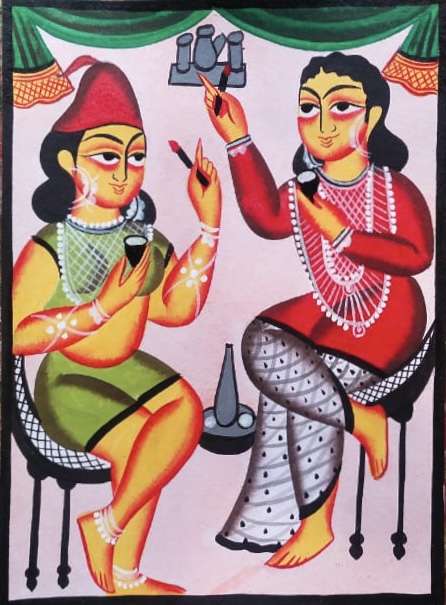
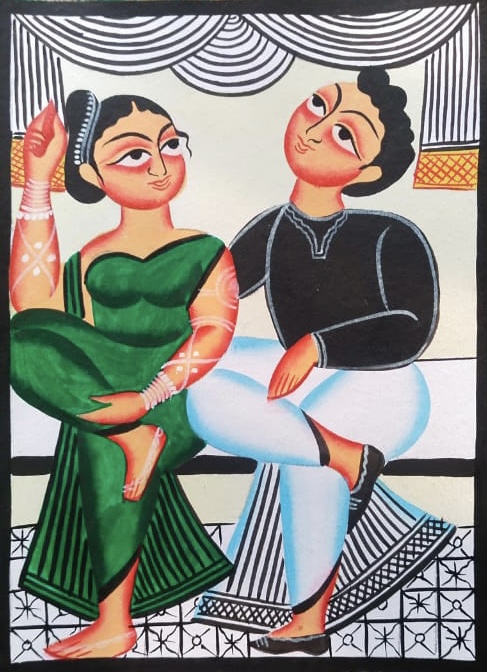
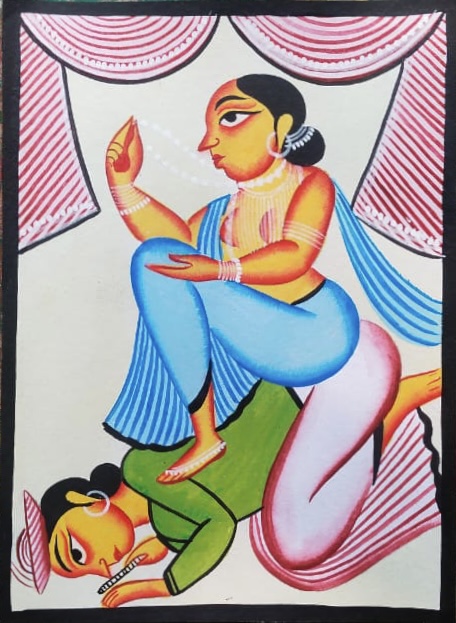
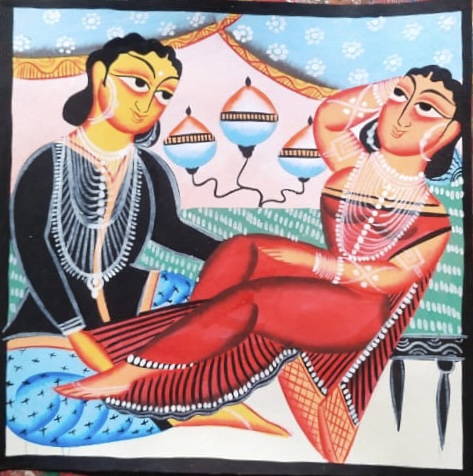
Kalighat Painting is a traditional Indian Art form that emerged in the 19th-century colonial atmosphere of Calcutta. This traditional painting style owes its name to the Kalighat Kali Temple around which this art originated. These are traditionally hand painted by patuas (village artists) on paper depicting bold and humorous scenes mostly, snippets from daily life. Kalighat art is known for its pristine visual rhythm, use of vibrant, opaque colors, and strong lines. The paintings are made using natural, water-based colors, and fine-haired brushes. Kalighat paintings are often a joint effort by a group of artists – usually from the same family. So while some members grind ingredients to create homemade dyes, others draw outlines of the figures, fill in the hues, or add final touches in the form of motifs and background designs. These paintings are a reflection of the social and political atmosphere of 19th century Bengal and often a satirical take on the ‘babu’ culture that the artists despised. Given that these artists had migrated from rural areas to a relatively new urban setting, these paintings were a reflection of their understanding of contemporary life.
Artists usually paint comical scenes of daily life, women and men feeding their pet cats, birds and animals, men travelling by elephants, barber cleaning the ear of a courtesan, etc. The famous “Babu-Bibi” (Man & his Mrs) depictions, cover the entire gamut of human emotions, from romantic love, family duty to fear and satire. Kalighat Pat stands reinvented since the period of British Raj, when Kalighat artists would sit along the roadside creating satirical paintings of the high-class, moneyed Bengali babus, who tried to embrace the leisured lifestyle of their British Rulers, spending hours preening and pampering themselves and their spouses. The portrayal of civil life in Kalighat pat art came to be known as the ‘Occidental school of Kalighat Painting’. Today, the Victoria and Albert Museum in London holds the largest number of Kalighat paintings, which have turned into priced possessions and invaluable collections.