
Kangra
Kangra art is a style of Indian miniature painting that originated in the Kangra Valley of Himachal Pradesh during the 18th century.
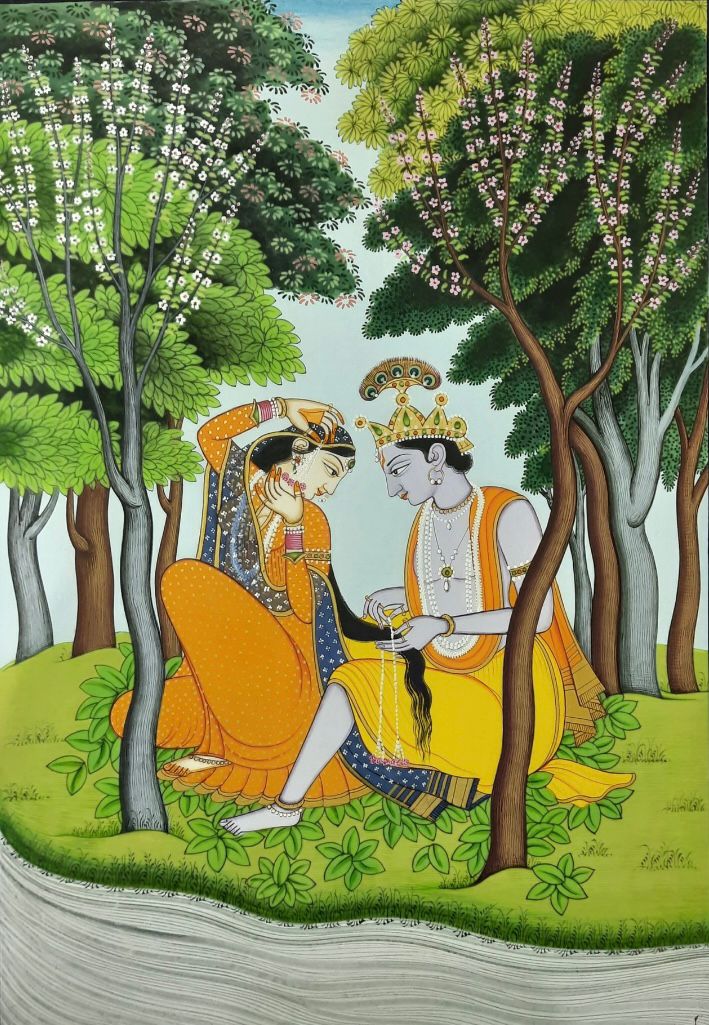
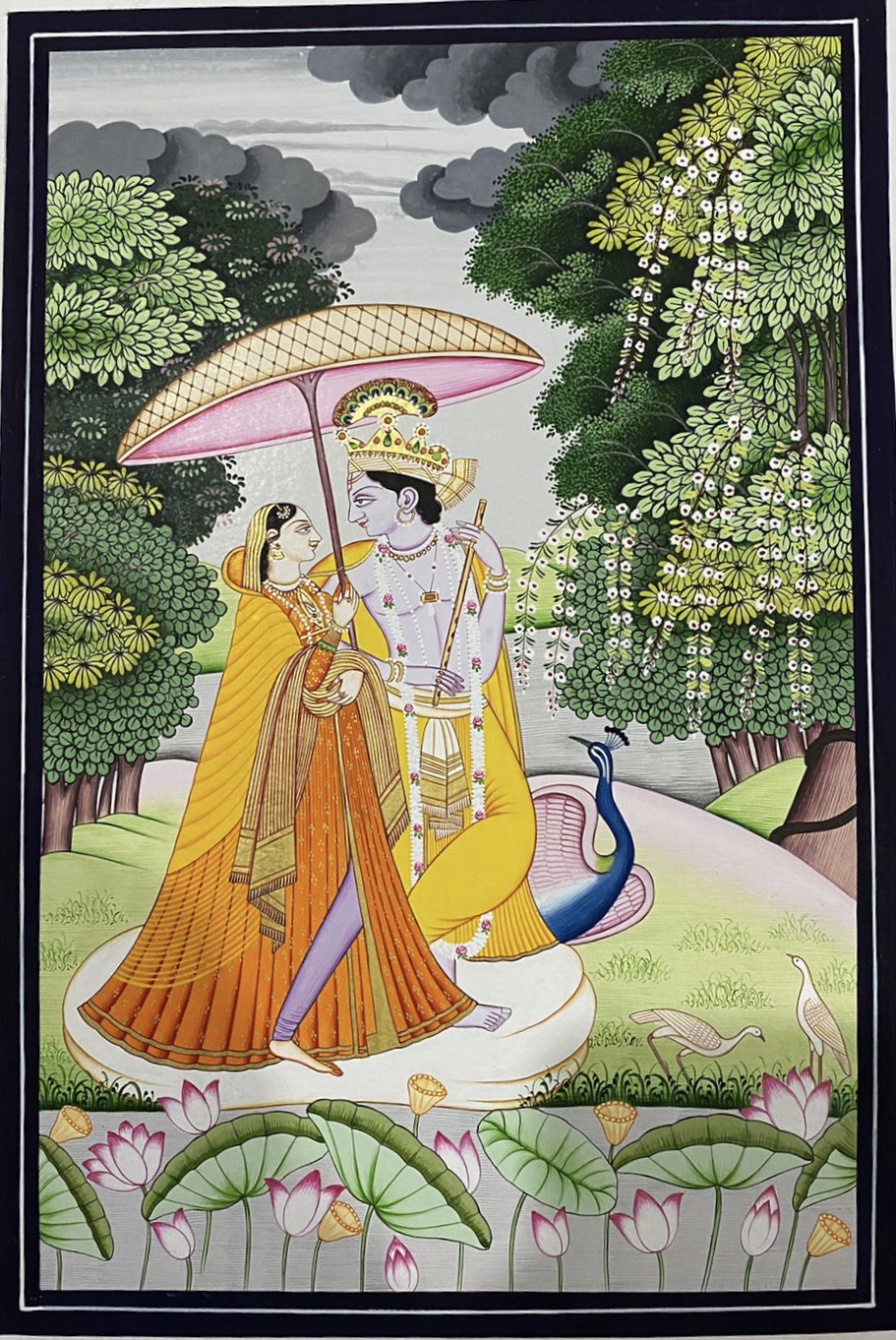
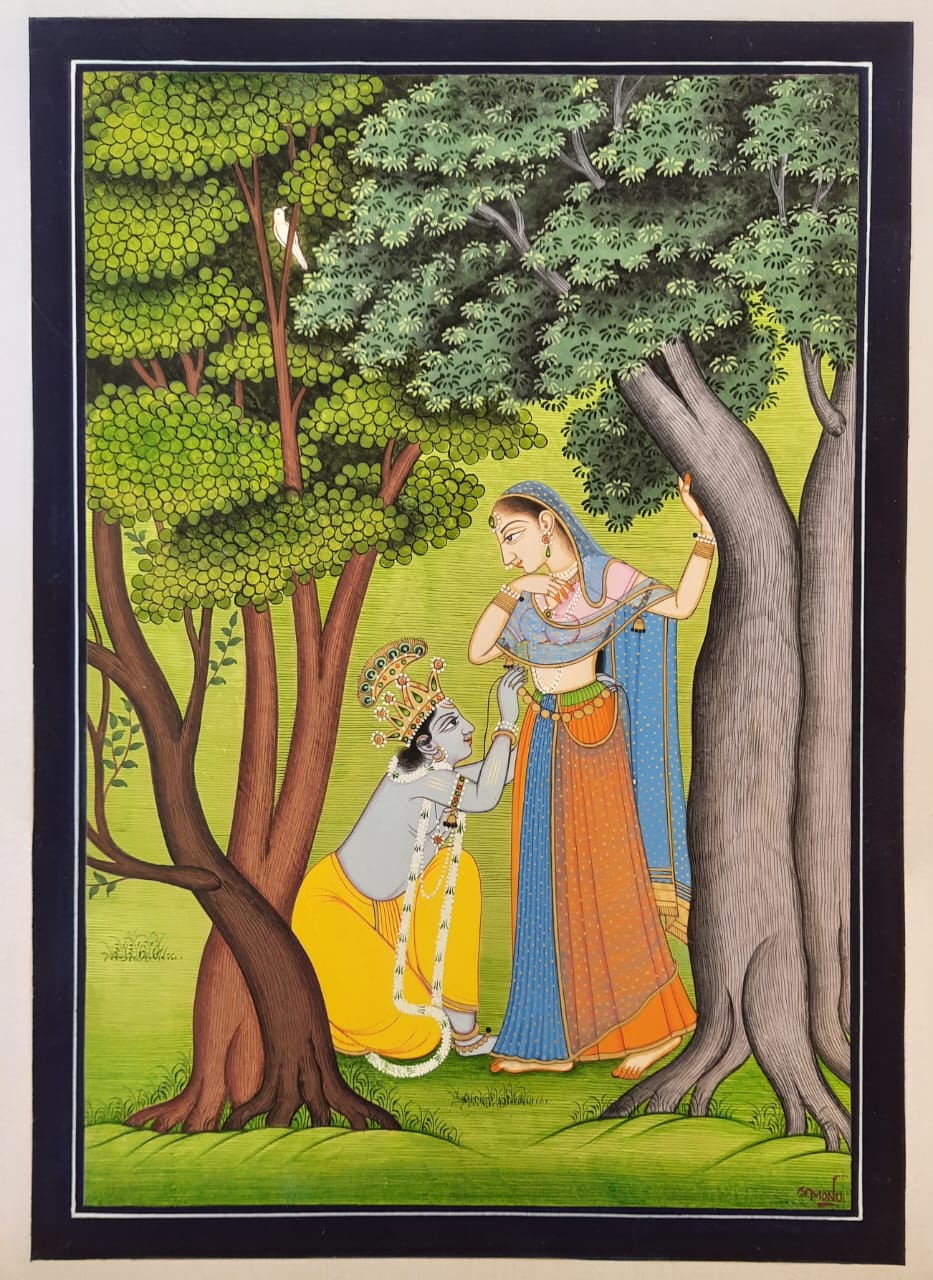
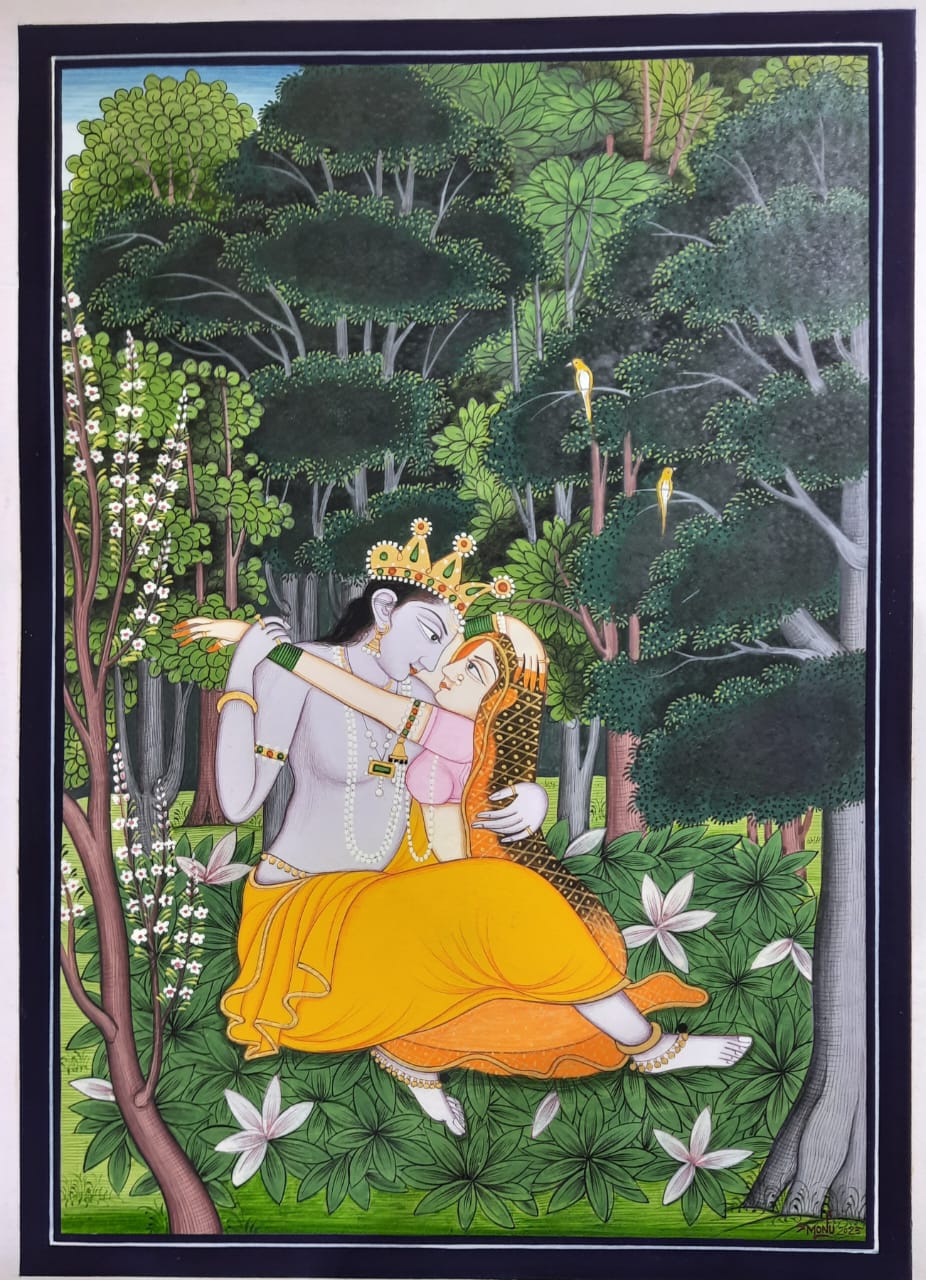
The Kangra art tradition flourished during the reign of Raja Sansar Chand, who was a great patron of the arts. Kangra art is primarily inspired by the love legends of Radha and Krishna, and it often depicts these mythological figures in various romantic and spiritual contexts. The artists who created Kangra art were heavily influenced by the Bhakti movement, which emphasized the devotion and love for God, and they used their paintings to express their own spiritual and emotional journeys.
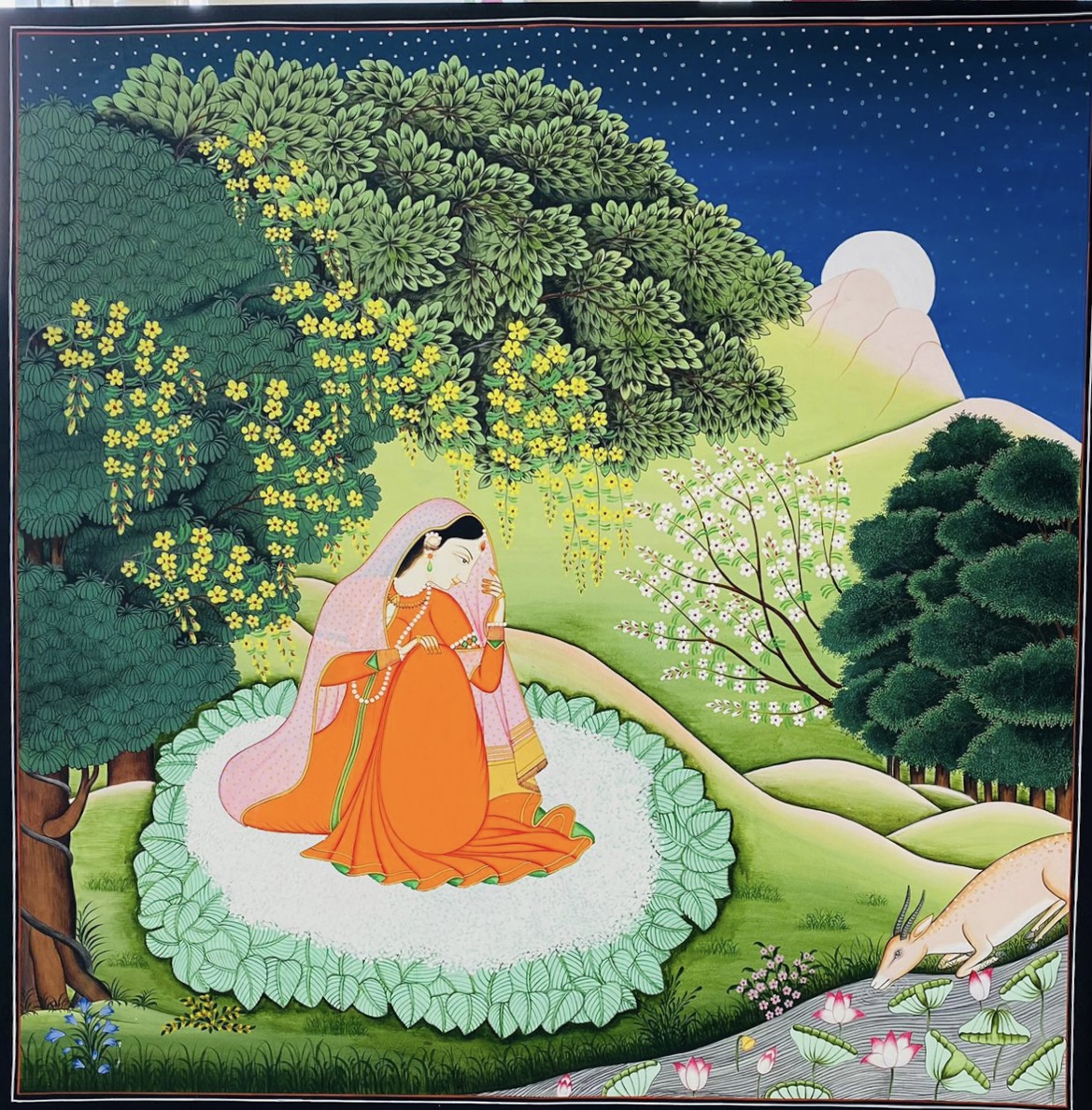
One of the most striking features of Kangra art is its attention to detail. The artists would spend hours meticulously painting every leaf, flower, and strand of hair, which added a sense of realism and depth to their work. The main difference between Kangra and Basohli art is that , Kangra art depicts extensive usage of foliage & greenery in the backdrop of every work such as creepers, trees, flowering plants and rivers drawn with great detail and precision. The female subjects are exquisitely shown in delicate figures, enchanting features and stunning garments inspired by the Mughal influences, adding immense beauty and charm to their depictions.
The artists would use fresh hues made from minerals, vegetables, and flowers, which added to the richness and depth of the paintings. The use of color in Kangra art is not just for aesthetic purposes, but also for symbolic ones. For instance, the color blue is often used to depict divinity and transcendence, while yellow is associated with earthly abundance and fertility.
Kangra art was also a reflection of the social and cultural milieu of the time as the paintings often depicted scenes from daily life, and they serve as a valuable record of India’s cultural heritage. Today, Kangra art remains an important part of India’s artistic and cultural legacy. It is celebrated for its exquisite beauty, intricate details, and spiritual themes.