
Pichwai
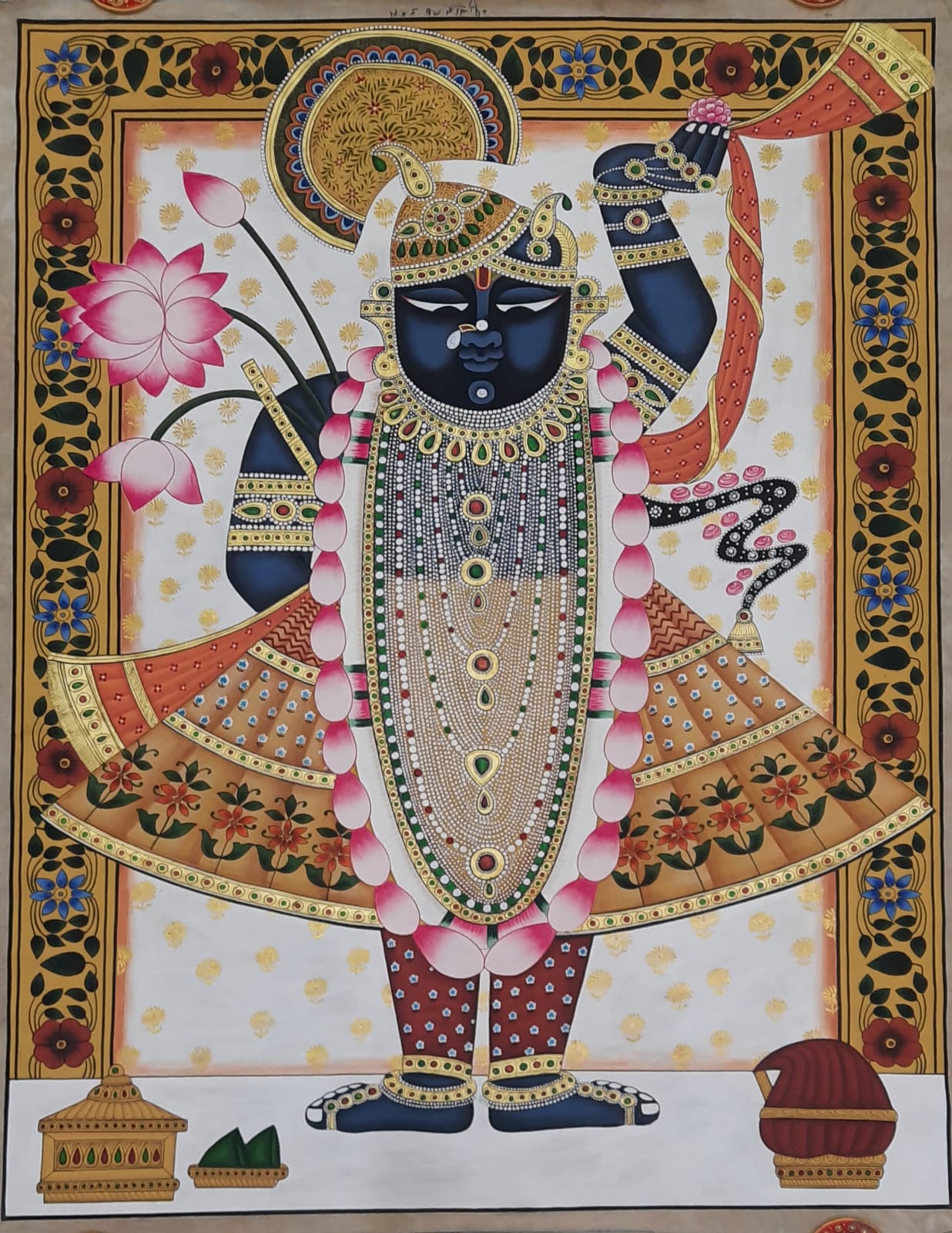
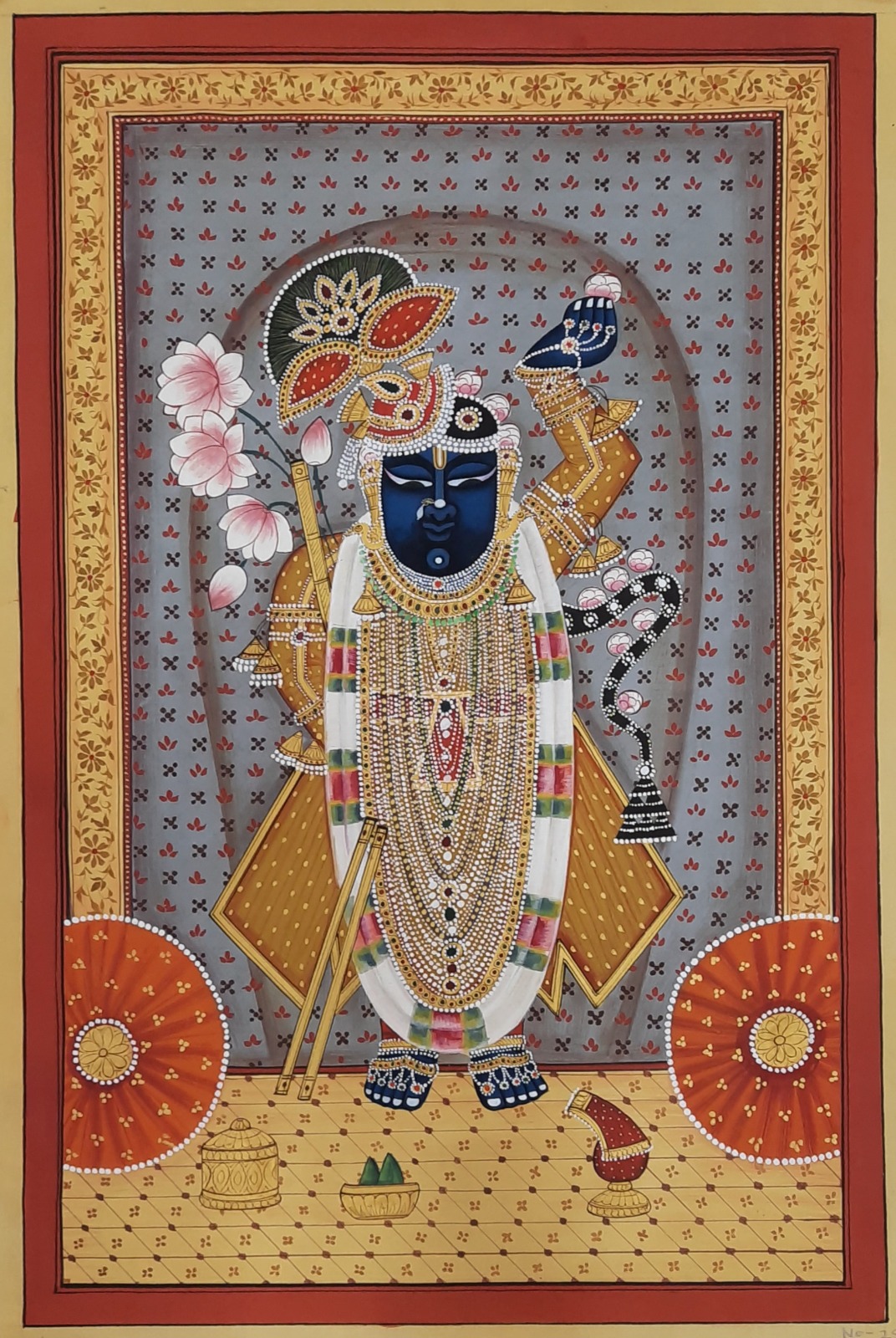
Pichwai is a traditional art form that emerged in the 17th Century at the Nathdwara temple in Rajasthan. Pichwais are intricate paintings dedicated to Shrinathji and are typically hung behind the idol of the deity in local shrines.
The word Pichwai has its roots in the Sanskrit pich (behind) and wai (hanging). These elaborately hand-painted artworks celebrate the different moods and expressions of Krishna, and mostly depict temple rituals like the adornment (shringaar) of Shrinathji. Elements of the Indian monsoon like the peacock, the lotus, and even his beloved cows are featured prominently and repeatedly.
The process of creation is unique. They aren’t created through regular easel-and-brush technique but rather very intricately stroke by stroke while sitting on the floor.
Pichwais are full of intricate embroideries, state-of-the-art gem work and fine detailing.
Over time, Pichwai painting came to be practiced in various local styles. The most recognisable among these are the Nathdwara style known for its expressive portraitures, the Deccan or Hyderabad defined by a liberal use of gold and silver leaf, the dynamic and fluid Kota-Bundi style, and the Kishangarh style inspired by Mughal miniatures.